
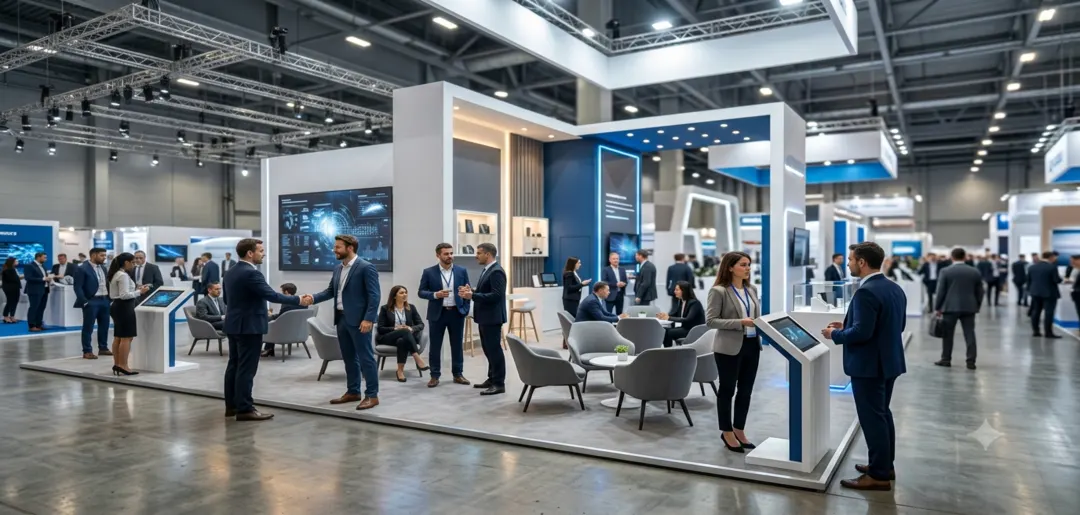
You can usually tell within ten seconds whether a booth is going to perform. Not from the budget — some of the most expensive stands on a show floor still feel flat — but from how it pulls people in, or doesn’t. Sometimes it’s the lighting. Sometimes it’s just that the layout makes sense the moment you glance at it. And sometimes, frankly, it’s a stand that’s clearly been thought through by people who’ve done this before.
If you’ve ever walked away from a trade show wondering why your booth didn’t generate the buzz you expected, this list is for you. Some of these tips are obvious once you hear them. A few aren’t.
Get clear on what you’re actually trying to achieve
This sounds basic, and that’s exactly why it gets skipped. Before anyone touches a design brief, sit down and decide what this specific show is for. Lead generation? A product launch? Just staying visible because your competitors will be there?
Here’s the thing — these goals pull in different directions. A stand built to generate qualified leads needs space for private conversations and a way to capture contact details quickly. A stand built around a flagship product launch needs visual drama and room for a crowd to gather. Trying to do both half-heartedly usually means doing neither well.
Don’t treat stand design as decoration
A lot of exhibitors still think of exhibition stand design as the part where you pick nice colours and put your logo somewhere visible. It’s not. Good design is structural — it decides where people walk, where their eyes land first, and whether they feel invited in or slightly blocked out.
We’ve seen companies spend a fortune on premium materials and still get it wrong because nobody thought about sightlines from the aisle. A well-designed stand does a few things at once: it signals what you do before anyone reads a word, it moves visitors through the space without making them feel herded, and it makes a modest footprint feel bigger than it is.
This is genuinely one area worth paying for proper expertise. At Suprano Displays, we’d rather spend an extra hour in the planning phase than fix a layout problem on-site at 11pm the night before opening — which, yes, has happened, and it’s not fun for anyone.
Pick your stand builder the way you’d pick a contractor for your house
Would you hire a builder based purely on a glossy brochure? Probably not. The same caution should apply to choosing an exhibition stand builder.
A few questions worth asking before you sign anything:
- Have they actually built at the venue you’re exhibiting at? Venue rules vary more than people expect.
- What happens if a panel arrives damaged two days before the show opens?
- Who’s on-site during build-up — the people who designed it, or a subcontracted crew who’s never seen the plans?
Suprano Displays has been doing this across European venues long enough to know where the typical headaches show up — and more importantly, how to avoid most of them before they happen.
There’s a real difference between a builder and a contractor
These terms get used interchangeably, but they shouldn’t be. A stand contractor is, ideally, managing the whole operation — permits, freight, on-site installation, electrical compliance, and the inevitable last-minute change request from your marketing team. A builder might just be the crew putting panels together.
The difference matters most when something goes wrong. And something always goes wrong — a delayed shipment, a venue that suddenly changes its rigging rules, a client who decides three days out that they need an extra meeting pod. A good exhibition stand contractor absorbs that chaos so you don’t have to.
Ask yourself whether modular is actually saving you money
Modular systems have their place — smaller shows, tighter budgets, first-time exhibitors testing the waters. Nothing wrong with that. But there’s a point where a custom exhibition stand stops being a luxury and starts being the more sensible option.
Why? Because a custom stand is built around your actual product and your actual goals, not retrofitted to fit a kit of parts someone else designed five years ago. It can include genuinely unusual structural features. It gives you separate zones for hospitality and quiet meetings instead of one open space trying to do both. And it scales — you’re not stuck with the same footprint every year regardless of how your needs change.
Quite a few of our long-term clients at Suprano Displays started modular and moved to custom once they realised how much a tailored space changed the quality of conversations they were having on the floor.
Walk through your own booth before anyone else does
Stand on the aisle and look in. Is there an obstacle right at the entrance — a tall counter, a reception desk — that makes people hesitate before walking in? That single decision kills more foot traffic than almost anything else.
Beyond the entrance, think about flow. People having a two-minute chat shouldn’t be standing in the same spot as people having a serious twenty-minute conversation. Products should be easy to reach without visitors having to squeeze past someone else. None of this is complicated, but it gets overlooked constantly because designers fall in love with how a render looks rather than how a crowd will actually move through it.
Lighting does more work than most people give it credit for
You can have the same physical structure lit two completely different ways and get two completely different impressions. Backlighting on graphics makes a stand glow from across the hall. A single spotlight on a hero product tells visitors exactly where to look without a sign telling them to.
Technology is similar — screens, touchpoints, the occasional AR demo — but only when it earns its place. The best exhibition stand design treats tech as part of the experience, not a feature bolted on because someone thought the booth needed “something interactive.” If a screen on your stand is just looping a corporate video nobody’s watching, it’s not helping you.
Your staff are doing more selling than your stand is
Here’s an uncomfortable truth: you can build the most striking custom stand in the hall and still walk away with nothing if the people staffing it are checking their phones or fumbling through your own product line.
Before the show, make sure the team actually knows:
- What you’re there to achieve (back to tip one)
- How to spot a genuinely interested visitor versus someone killing time
- The stand’s layout well enough to direct people without hesitating
It’s a small investment of prep time that pays off disproportionately.
Logistics will make or break you long before the doors open
Nobody gets excited about freight schedules and customs paperwork, but this is where a surprising number of exhibitions go sideways — especially when shipping across borders within Europe, where documentation requirements aren’t always consistent show to show.
A capable stand contractor handles this end-to-end: shipping timelines, storage, customs, and the installation schedule that has to align with everyone else’s build-up at the same venue. Get this wrong and you could have a beautifully designed stand sitting in a warehouse somewhere while the show opens without it.
Actually look back at what happened
Most exhibitors pack up and move straight on to the next thing. Worth resisting that urge, at least for an hour. How many genuinely qualified leads came out of it? Which part of the stand actually drew people in — was it where you expected? Did your team mention any recurring questions or objections from visitors?
This feedback loop is what separates exhibitors who get incrementally better every year from those who repeat the same mistakes. It’s also exactly what you’d want to bring to your exhibition stand builder ahead of the next show, so the next iteration improves rather than just repeats.
The partner question matters more than people think
If there’s one thread running through all of this, it’s that exhibition success isn’t really about any single decision — it’s about who’s helping you make those decisions. A good exhibition stand contractor doesn’t just execute a brief. They push back when something won’t work, catch problems before they become expensive, and generally make the whole process feel less like a gamble.
That’s the role Suprano Displays has built its reputation on across Europe — from early-stage exhibition stand design through fabrication and on-site installation. We’re not precious about modular versus custom, big budget versus modest. We just want the stand to actually work for the people standing in it.
Worth getting right
A booth that performs isn’t an accident, but it’s also not magic — it’s a series of decisions made properly, usually with the help of people who’ve made those decisions many times before.
If you’re planning your next show and want a custom exhibition stand that’s actually built around what you’re trying to achieve, get in touch with Suprano Displays. We’ve spent years building stands across European venues, and we’d rather have an honest conversation with you now than fix avoidable problems later.
Talk to Suprano Displays about your next exhibition stand project.