
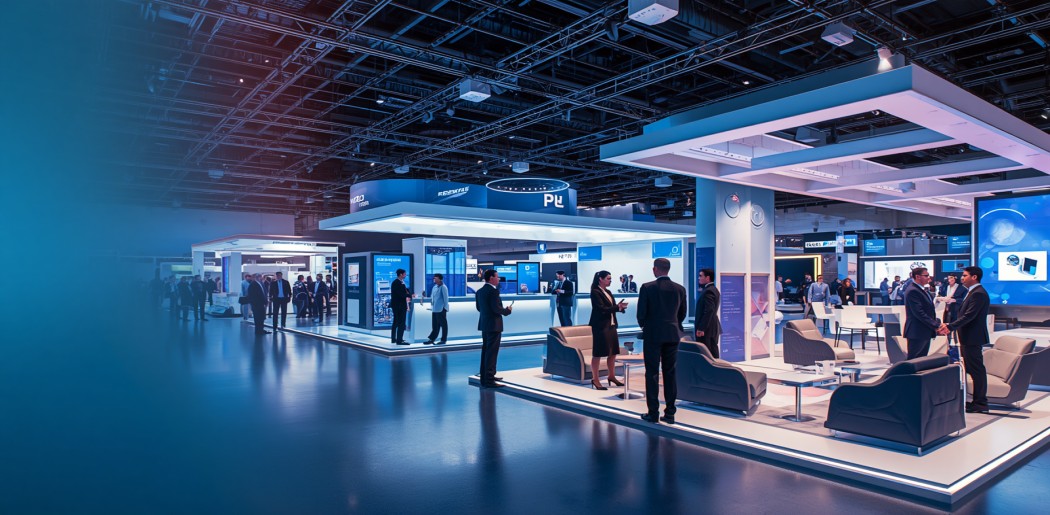
Most companies discover the hard way that an exhibition stand isn’t really one project — it’s about a dozen smaller ones stitched together. Design, fabrication, logistics, permits, on-site build, staffing, teardown, storage. Miss a handover between any of those stages and you feel it, usually at the worst possible moment, usually the night before doors open.
This is exactly why “end-to-end” has become such a common phrase in this industry, even if it’s thrown around more loosely than it should be. So let’s actually unpack what it means, what it should include, and how to tell whether a provider is genuinely offering it or just saying so.
What “end-to-end” actually covers
At minimum, a true end-to-end exhibition partner handles:
- Strategy and briefing — understanding what the stand needs to achieve before anyone draws anything
- Exhibition stand design — the creative and structural plan
- Fabrication and material sourcing
- Logistics, shipping, and customs (especially relevant across European borders)
- On-site installation and dismantling
- Storage between shows
- Project management tying all of the above together
Leave out any one of these and you’re left coordinating between multiple vendors yourself — which sounds manageable until you’re the one fielding three separate phone calls during build-up because nobody agreed on who handles electrical compliance.
Why fragmented projects tend to go wrong
Here’s a pattern we’ve seen repeatedly: a company hires a designer for the concept, a separate fabricator to build it, and a local contractor to install it at the venue. Each party did their individual job competently. The stand still didn’t work properly, because nobody owned the gaps between those jobs.
Maybe the design assumed rigging points that the venue doesn’t allow. Maybe the fabricator built to slightly different dimensions than the final venue plan called for. Maybe nobody confirmed the loading dock schedule until two days before. Individually, none of these are huge problems. Stacked together, they’re how a promising stand turns into a stressful opening morning.
Why Exhibition Stand Design Is the Foundation
It’s tempting to think of design as just the visual layer — the part that makes the stand look good in renders. That’s a mistake. Exhibition stand design decides almost everything that happens afterward: how materials get sourced, how the structure gets transported, how quickly it can be assembled, and whether it’ll even fit the venue’s height and rigging restrictions.
A design that ignores these realities looks fine on a screen and becomes a logistical headache in real life. This is precisely why design shouldn’t happen in isolation from the people who’ll eventually build and ship the thing. At Suprano Displays, our design team works alongside production and logistics from the earliest sketches — not as an afterthought once the concept’s already locked in.
What good design actually solves for
A well-considered stand design needs to balance several things at once:
- Visual impact strong enough to draw attention from the aisle
- Functional layout that lets visitors move comfortably
- Structural choices that are realistic to fabricate and transport
- Compliance with the specific venue’s technical requirements
Get the balance wrong in either direction — too ambitious structurally, or too cautious creatively — and the stand underperforms.
Choosing an Exhibition Stand Builder Who Can Actually Deliver
Plenty of companies can build a stand. Far fewer can build the stand exactly as designed, on schedule, at a venue they may never have worked at before, while managing the dozen small surprises that always come up.
When evaluating an exhibition stand builder, a few questions tend to separate the genuinely capable from the merely willing:
- Have they built at this specific venue, or one with similar restrictions?
- What’s their actual process if a shipment is delayed?
- Do they manage logistics directly, or subcontract it out to someone you’ve never spoken with?
Suprano Displays has built across major European exhibition centres long enough to know the quirks that catch first-time exhibitors off guard — rigging limits that differ wildly between venues, loading schedules that shift without much notice, local labour regulations that affect build timelines. None of this is glamorous knowledge, but it’s the difference between a smooth build and a chaotic one.
The Role of the Exhibition Stand Contractor
This is where the “end-to-end” promise either holds up or falls apart. A capable exhibition stand contractor isn’t simply executing a design — they’re managing freight, customs paperwork, venue compliance, on-site supervision, and the inevitable last-minute change request from someone back at head office.
The value of a strong stand contractor becomes most obvious when something goes wrong, because something usually does. A missing component, a venue rule that changed since the last show, a client who needs an extra meeting space added three days before opening. Good contractors absorb these problems quietly. Weaker ones turn them into your problem.
Why a Custom Exhibition Stand Often Makes More Sense Than People Assume
Modular systems are perfectly reasonable for smaller shows or first-time exhibitors testing a market. But there’s a point — usually once a company starts exhibiting regularly — where a custom exhibition stand stops being indulgent and starts being the more practical option.
A custom stand is designed specifically around your products, your space, and your goals, rather than adapted from a kit built for general use. It allows architectural features that genuinely stand out. It can include private meeting areas separate from open demo space. And critically, it scales with you — built once, refined over future shows, rather than rebuilt from scratch every time.
Quite a few long-term clients at Suprano Displays started with modular stands and moved toward custom builds once they noticed how much more productive their conversations became in a space actually designed around how they work.
Logistics: The Unglamorous Part That Decides Everything
Shipping, storage, customs documentation — none of this gets discussed in flashy marketing materials, but it’s often where exhibitions succeed or fail. Cross-border logistics within Europe carry their own quirks depending on the country and venue, and a missed deadline here can mean a stand that simply isn’t ready when the doors open.
An end-to-end provider manages this as part of the same project, not as a separate afterthought handled by whoever happens to be cheapest.
Bringing It All Together
The real argument for end-to-end exhibition solutions isn’t convenience, though that’s a nice side benefit. It’s continuity — one team accountable for the whole project, rather than several vendors each responsible for their own slice and nobody responsible for how the pieces fit together.
This is the model Suprano Displays has built its reputation on across Europe: design, fabrication, logistics, and on-site delivery handled as one coherent project rather than a relay race between unconnected vendors.
Ready to Simplify Your Next Exhibition?
If you’re tired of coordinating between separate designers, builders, and logistics providers, it might be time for a different approach. Suprano Displays offers genuinely end-to-end exhibition stand solutions across Europe — from initial concept through exhibition stand design, build, and on-site delivery.
Get in touch with Suprano Displays today to discuss your next exhibition, and let’s build something that works the way it’s supposed to, from the first sketch to the final teardown.